
How to Communicate with a Loved One Who Has Dementia: 8 Compassionate Strategies for Family Caregivers in 2026
Struggling to connect with a loved one with dementia? Discover 8 compassionate communication strategies that reduce frustration, strengthen your bond, and make daily caregiving more manageable.
How to Communicate with a Loved One Who Has Dementia: 8 Compassionate Strategies for Family Caregivers in 2026
If you're caring for someone with dementia, you've probably experienced this: you ask a simple question and get a confused stare. You share a piece of news and it's forgotten within minutes. You try to redirect a moment of distress and end up more frustrated than when you started.
And then the guilt sets in — because you love this person deeply, but some days, connecting with them feels nearly impossible.You are not doing it wrong. Dementia changes the brain in ways that make communication genuinely hard, and the strategies that worked in normal conversation simply don't apply anymore. The good news is that with the right approaches, you can still reach your loved one — not always through words, but through presence, patience, and connection that goes far deeper than language.
Before we get into those strategies, know that you don't have to figure this out alone. HugLoom (https://www.hugloom.vercel.app) is a safe, verified, ad-free community built by a caregiver for caregivers — a place where people who are navigating exactly what you're going through right now can share real experiences and genuine support. More on that at the end. For now, let's focus on what can help you today.
Understanding Why Communication Changes in Dementia
Dementia — whether Alzheimer's disease or another form — progressively damages the parts of the brain responsible for language, memory, and reasoning. According to the Alzheimer's Association, people with dementia commonly experience difficulty finding the right words, losing their train of thought mid-sentence, repeating the same phrases, and eventually relying more on gestures and facial expressions than spoken language.
What's important to understand is that these changes are neurological — not personal. Your loved one isn't being difficult on purpose. The disease is making it harder for their brain to process incoming information and form outgoing responses. Adjusting your communication style to meet them where they are — rather than expecting them to meet you where you are — is the key to reducing frustration on both sides.
Here are eight strategies that dementia specialists, caregivers, and researchers consistently recommend.
1. Get Their Full Attention Before You Start Talking
One of the most overlooked communication mistakes is starting a conversation before you have your loved one's attention. With dementia, the brain has a harder time filtering competing stimuli — a television in the background, movement in the room, or a loud environment can all make it nearly impossible for your loved one to focus on what you're saying.
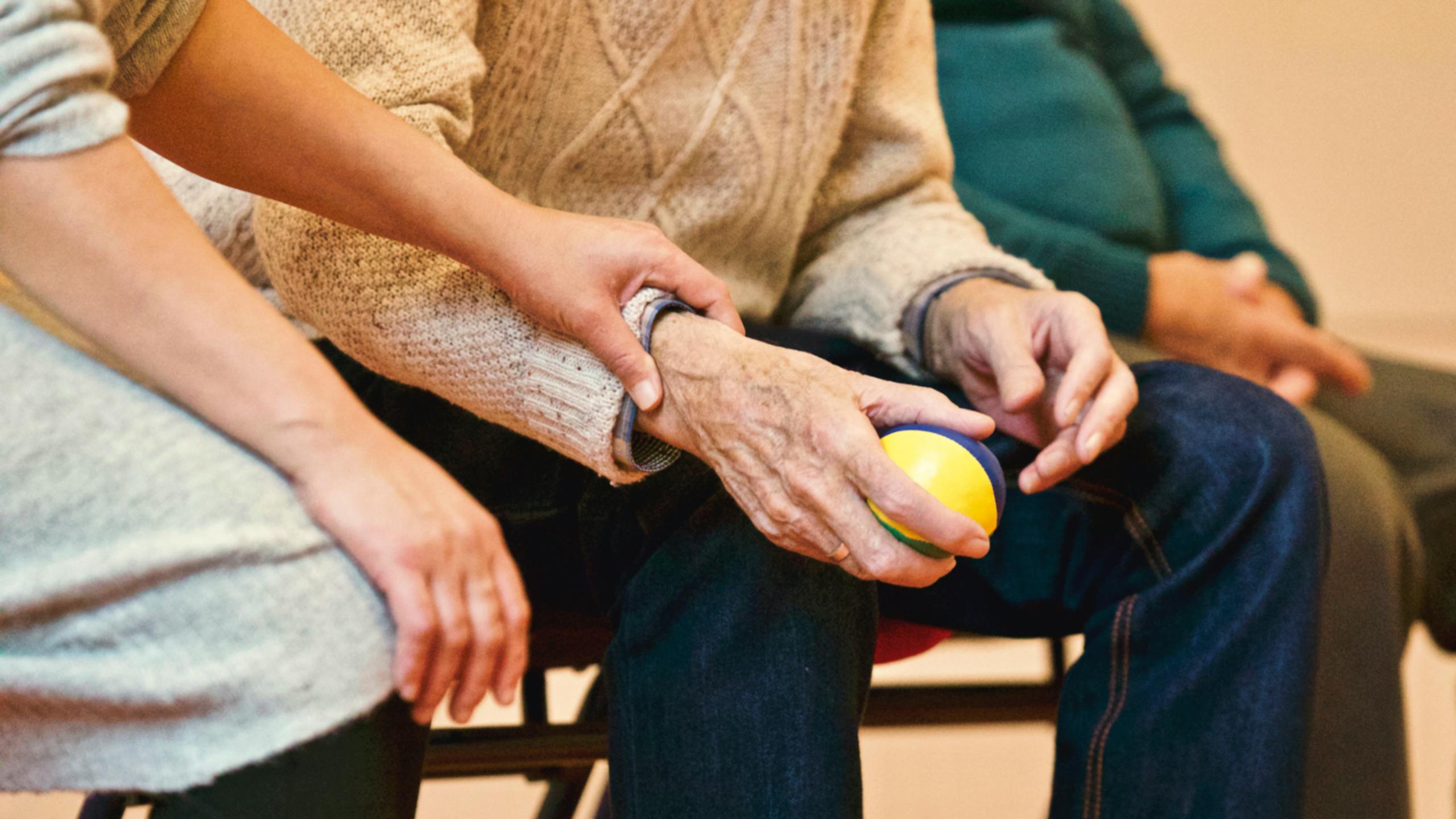
Before speaking, come to their level. If they're seated, sit or crouch down so you're at eye level. Use their name gently. Make eye contact. Touch their hand or arm if appropriate. Only once you have that focused connection should you begin speaking. This small step alone can dramatically reduce confusion and improve how well your words land.
It's also worth turning off or reducing background noise — the TV, radio, or any competing sounds — before having any important conversation or giving instructions. A quiet, calm environment is one of the most powerful communication tools you have.
2. Use Short, Simple, One-Idea Sentences
The way we typically speak — layered with context, multiple ideas, and implied meaning — is deeply challenging for someone with dementia to process. Their working memory and processing speed are both reduced, which means complex sentences can overwhelm them before they've finished registering the first few words.
The adjustment here is significant but learnable: break everything down into its simplest form. Instead of "Would you like to get dressed now so we can eat breakfast and be ready before your appointment?" try "Let's get dressed." One step at a time. One idea at a time.
Ask questions that require only a yes or no answer when possible — "Are you cold?" is much more manageable than "What would you like to do to feel more comfortable?" Offering limited choices also helps: "Would you like soup or a sandwich?" gives agency without overwhelming.
Give your loved one time to respond. Experts suggest waiting longer than feels natural — and then waiting a little more. Rushing them or finishing their sentences often increases anxiety and shuts down communication. Silence is not failure; it's processing.
3. Never Argue, Correct, or Try to Reason Your Way Through
This is one of the hardest shifts for family caregivers to make, and yet it may be the single most important one. When your loved one says something factually incorrect — that your father (who passed away years ago) is coming for dinner, or that they need to get to a job they retired from decades ago — every instinct might tell you to gently correct them. Resist that instinct.
Correcting someone with dementia doesn't help them remember. It only tells them, over and over, how disabled they are. It causes distress, confusion, and sometimes anger — without producing any lasting awareness of what's real. As dementia experts at Alzheimer's San Diego put it, asking someone with dementia to remember is like asking a blind person to see.
Instead, meet them in their reality. If they believe it's a different year or a different time in their life, engage with them there. Ask questions about that memory. Listen to what they're experiencing emotionally. Then gently redirect to the present when it's appropriate and necessary for their safety or comfort.
This approach — sometimes called "validation therapy" — honors the emotional reality of the person even when the factual reality differs from yours. It reduces distress, builds trust, and keeps communication open.
4. Pay Close Attention to Non-Verbal Communication
As dementia progresses and language becomes more difficult, behavior often becomes the primary way your loved one communicates their needs, feelings, and discomforts. Restlessness, repetitive movement, refusing to eat, increased agitation in the late afternoon or evening (sometimes called "sundowning") — these aren't random.
They're often expressions of something: pain, hunger, fear, boredom, the need for the bathroom, or simply the need for connection. Learning to read these behavioral signals takes time, but it's one of the most powerful skills a dementia caregiver can develop.
Start keeping mental or written notes of when certain behaviors occur and what was happening beforehand. Patterns will emerge. That restlessness before dinner might mean hunger. That increased agitation in the evening might mean fatigue or overstimulation.
Once you identify the pattern, you can often address the underlying need before it escalates. Your own non-verbal communication matters equally. Research consistently shows that people with dementia remain deeply attuned to tone of voice, facial expression, and body language even as verbal comprehension declines. A calm voice, a relaxed posture, a warm expression — these signal safety and ease tension far more than the specific words you're using.
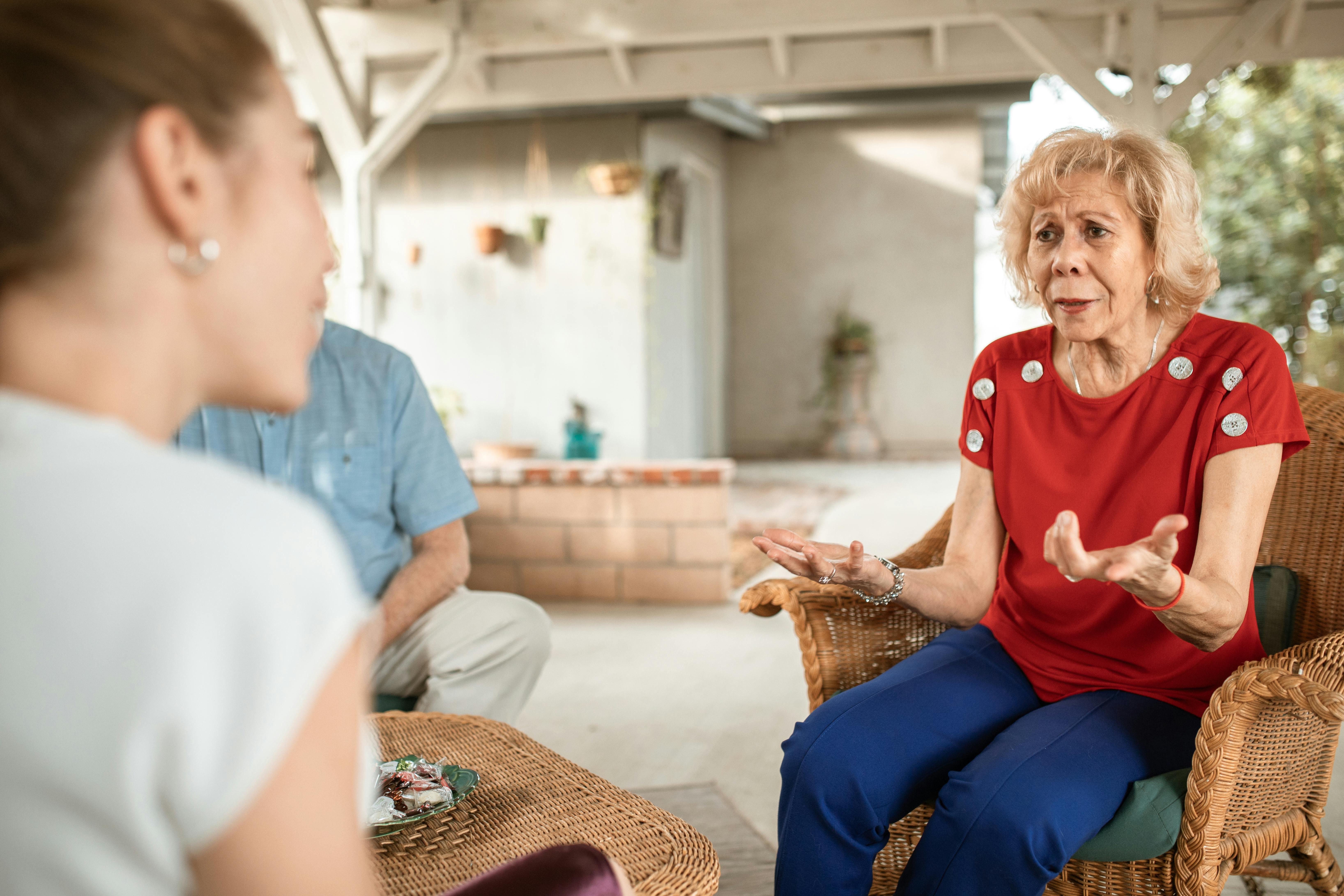
5. Enter Their World: Use Reminiscence and Long-Term Memory
Here's something that surprises many families: while short-term memory is often the first significant casualty of dementia, long-term memories — especially those with strong emotional associations — frequently remain accessible for much longer.
Memories from decades ago: childhood, early adulthood, music from their youth, people they loved deeply. This is a powerful communication gift if you use it intentionally.
Bring out old photo albums and ask about the people in the pictures. Play music from the era they grew up in. Talk about places they lived, foods they loved, or significant moments in their life. These conversations don't just fill time — they provide genuine connection, stimulate engagement, and affirm the person's identity and history at a time when so much else feels uncertain.
Music in particular has a remarkable effect. Research has shown that even people in advanced stages of dementia who have largely lost verbal language can respond to music with recognition, emotion, and even sing along to familiar songs. If your loved one has music that meant something to them, incorporate it into daily care — during bathing, meals, or moments of agitation.
6. Create Consistency and Predictability
Uncertainty is one of the most anxiety-producing experiences for someone with dementia. When they don't know what's coming next, the brain — already struggling with processing — goes into a state of heightened alert that can manifest as agitation, resistance, or emotional distress.
Routine is one of the most powerful stabilizing forces in dementia care. When daily activities happen in the same order at roughly the same times — waking, meals, personal care, activities, rest — the brain begins to pattern-recognize even when conscious memory cannot. This reduces the need to explain or negotiate at every step, because the routine itself becomes familiar.
When changes in routine are unavoidable, give gentle advance warning: "After lunch, we're going to visit the doctor today." Keep the language simple and reassuring. And when a transition goes poorly, don't fight it. Redirect, try again later, or take a different approach. Flexibility on your end — while maintaining the overall structure — is the balance that works best.
7. Protect Your Own Patience — It Has Limits, and That's Okay
No matter how much you love your family member, there will be moments when the repeated questions, the confusion, the emotional outbursts, or the sheer relentlessness of dementia caregiving pushes you to your edge. This is not a character flaw. It is a human response to an extraordinarily hard situation.
Harvard Health experts emphasize the importance of briefly stepping away when frustration is building — not abandoning your loved one, but giving yourself 10–15 minutes. Turn on familiar music or the television for them, step into another room, take some slow breaths, and reset. A moment of self-regulation prevents a moment of reaction you might regret.
Equally important is seeking connection with others who truly understand what dementia caregiving is like. This isn't something most general social networks can offer. The isolation of dementia caregiving is profound — as one Harvard geriatric nurse practitioner noted, caregivers often feel like they're the only ones dealing with these challenges, even though they absolutely are not. Finding a community where you can speak honestly, be understood without explaining yourself, and receive support from people in the same situation is not optional — it's essential to your ability to keep going.
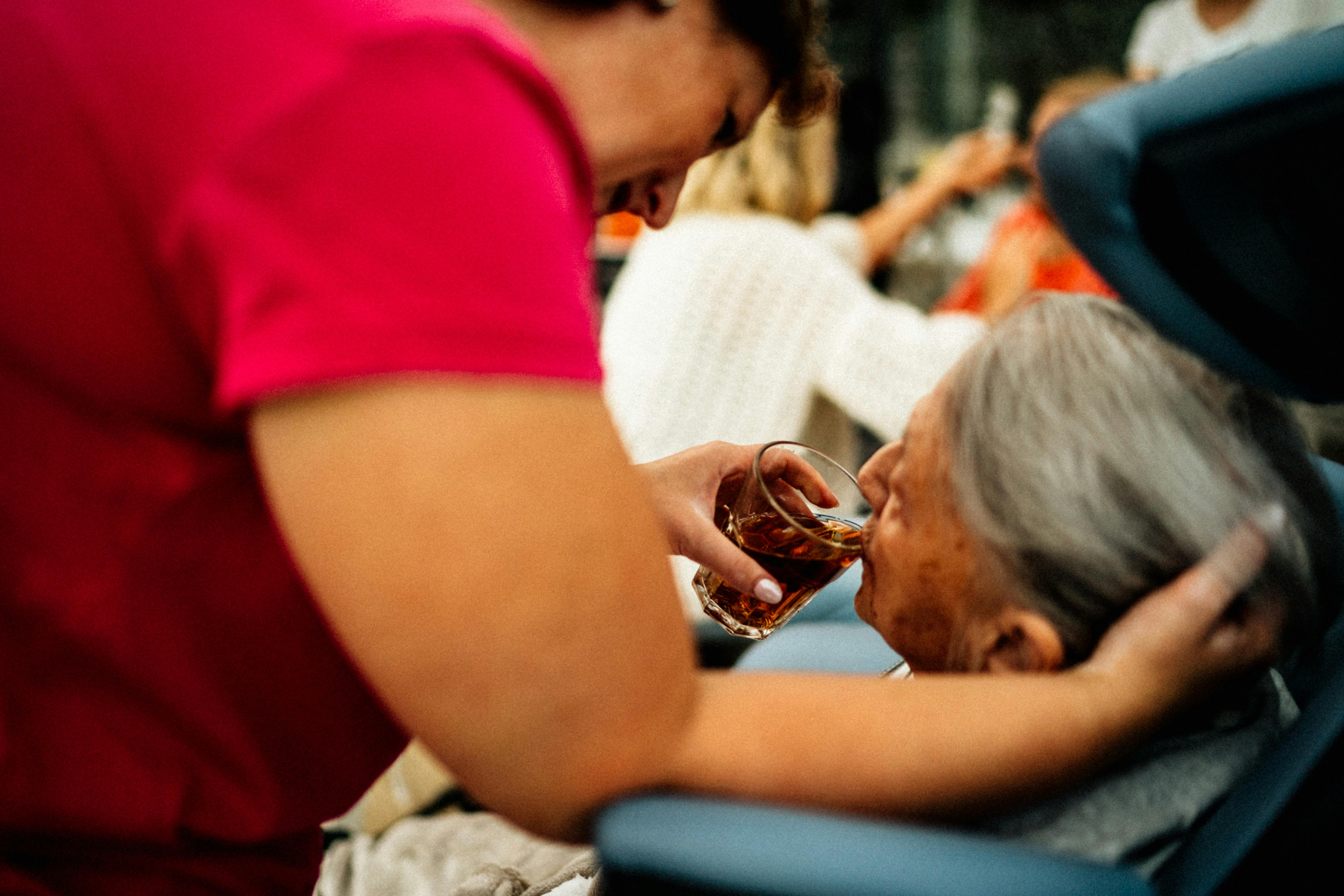
8. Know That Connection Is Still Possible — Even Without Words
Perhaps the most important thing to hold onto when words are hard or gone entirely: your loved one still knows you. Not always by name or by cognitive recognition, but by feel — by the warmth in your voice, the safety of your presence, the love in how you touch their hand. Emotional memory is remarkably durable, often outlasting factual and verbal memory by years.
You don't need a perfect conversation to connect. Sitting together in a comfortable silence, holding hands during a familiar TV program, sharing a meal, or simply being present with calm and affection — these are forms of profound connection. The relationship is not gone. It has simply changed form.
On the days when communication is at its hardest, remind yourself of this: you are showing up. You are learning. You are trying. And that love is received, even when it cannot be reflected back in the way it once was.
You Deserve Support Too
Caring for someone with dementia is one of the most emotionally and physically demanding roles a person can take on. If you're doing this work, you deserve a community that sees you — not just as a caregiver, but as a whole person who needs understanding, practical resources, and genuine connection.
HugLoom was built by a caregiver who understood that gap. It's an ad-free, verified social network designed exclusively for family caregivers — a space where you can connect with others navigating dementia care, coordinate care through shared calendars and medication tracking tools, access local volunteer support, and check in on your own wellness along the way.
You don't have to do this alone. Join the HugLoom community today at https://www.hugloom.vercel.app and find the support you deserve.